Comics /
Spotlight
Horse Sense: A Short History of Dark Horse Comics
By
Philip Schweier
July 13, 2007 - 17:09
Dark Horse Comics began during the heyday of the “independent” boom of the mid-1980s. At the time, many fledgling comic publishers such as First, Comico and Eclipse challenged DC and Marvel for a share of the comics market. Today, only Dark Horse has survived the turbulent business world, and consistently holds its own against the so-called “big two.”
Founder Mike Richardson operated a number of comic shops in the Portland, Oregon area, and believed comics being published at the time weren’t living up the potential of the medium. Rather than hoping for an immediate change from the more corporate Marvel and DC, he opted to take on the challenge himself.
|
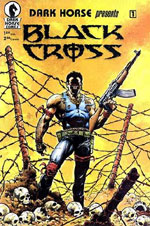
Dark Horse Presents, an anthology series, debuted in July, 1986, selling 50,00 copies of its first issue and ran for approximately 160 issues. Richardson’s philosophy was that quality storytelling was the key to success, and the company was soon publishing innovative titles that went beyond the typical “men in tights” super-hero approach. Boris the Bear, by James Dean Smith, sold more than 80,000 copies.
With such staggering sales figures, Richardson, along with business partner Randy Stradley, knew it was time for a more serious approach. They had initially thought their books would provide a modest sideline for their retail operations, but it quickly became apparent it should be the other way around.
With a change in its business focus, Dark Horse began approaching comics creators whom Richardson and Stradley admired, such as Marvel veteran Paul Gulacy. Lesser-known writer/artists such as Paul Chadwick evolved into highly acclaimed professionals. His Concrete went on to win multiple industry awards.
It also began to approach film companies in the hopes of licensing other properties for comic adaptation. In some instances, the license was unavailable, prompting the Richardson and Stradley to take a more creative approach.
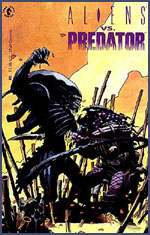
According to BACK ISSUE #22 (June, 2007), Dark Horse would “sliver” a license. For instance, if the license for producing a Predator model was unavailable, the company would apply to produce a resin statue of a character; different product, different license up for grabs. Even so, having a license sometimes legally required an additional variation. Despite producing both an Aliens comic book and a Predator title, in 1989 Dark Horse was required to negotiate a third contract to produce an Aliens vs. Predator comic book.
Dark Horse Entertainment, a film division, was formed in 1992. It’s first project, the comedy The Mask, was a hit at the box office, and paved the way for other film adaptations such as Mike Mignola’s Hellboy and Frank Miller’s Sin City.
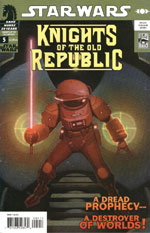
By working in tandem with the movie industry, Dark Horse has also successfully marketed series based on licensed properties, such as Buffy the Vampire Slayer, Aliens, and Conan. Since 1991, its line of Star Wars titles have been recognized by Lucasfilm as “canon,” making them official Star Wars lore. The company has since become recognized as the go-to company for movie-makers looking to market their film creations to the comic book audience.
Beginning in 1993, Dark Horse Comics made forays into the realm of superheroes, which may have been contrary to the “dare to be different” philosophy. The heroes line lasted only three years, while more innovative projects prospered.
Today, Dark Horse is third largest comic-book publisher in the U.S., behind dominant publishers Marvel Comics and DC Comics. Projects published by the company have received more than 80 Eisner awards and over 25 Harveys. Its DH Press imprint publishes novelizations of the more popular comic book titles, including Aliens and Predator.
Last Updated: July 2, 2026 - 07:01
 ComicBookBin