Comics /
Spotlight
Copyrights and Comic Book Creators: Be Careful What You Wish For
By
Hervé St-Louis
September 23, 2009 - 06:12
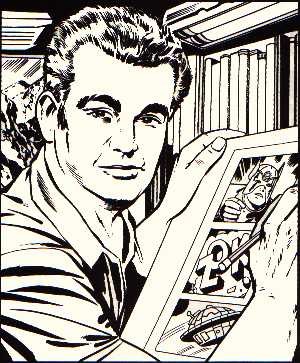
The latest news since September 20 2009, is the reported intention of the four children of the late comic book creator Jack Kirby to challenge Marvel Comics’ copyrights over several of the characters published by the New York-based comic book publisher. Some pundits allege that the motivation behind Kirby’s children is the intent by media conglomerate Disney to purchase Marvel Entertainment, including its vast library of characters which spans several thousand characters.
The law firm hired by the Kirbys is Marc Toberoff’s. Toberoff’s firm is responsible for representing the estates of Joe Shuster and Jerry Siegel in a similar case against Marvel Comics’ traditional competitor, DC Comics, which is owned by Time Warner. Already, stories about Toberoff’s skills as a lawyer are mentioned as an important factor in the case. While many comic book readers fear Toberoff’s notorious practice, others rejoice, secretly and publicly on having Disney and Marvel Entertainment having to deal with this behemoth of copyrights law.
Having already gained a reputation as an opponent to the orgy that is copyrights in the United States and the presumptions of ownerships of the estates of Siegel and Shuster to Superman, I will right off the bat extend the same criticism to Jack Kirby’s estate. What’s good for gander is good for the goose. This writer stands for the quick reversion of all copyrights to the public commons and generally opposes the extension of copyrights to estates of dead creators when they are not directly inherited. The logic in the Superman and Marvel Comics’ cases is similar although there is one distinction with Jack Kirby’s that makes it interesting from the point of view of this author. In the case of Jack Kirby, there is a clear case of collusion between the moral rights of the Kirby estate and copyrights.
Moral rights, as a recap, are those rights which are inalienable for a creator. They cannot be removed. Jack Kirby will forever be one of the men that created the Fantastic Four. Moral rights give Jack Kirby and his estate the right to claim that he was one of the creator of the Fantastic Four and even, have that right enshrined in any material where the Fantastic Four appear. If the Fantastic Four were to be transformed into Hawaiian frogs that played the ukulele, depending on the presiding judge, Jack Kirby, and not his estate could ask for a correction to such a transformation of his work. Particularly, as concerns Jack Kirby, had he been well advised when he was alive, he could have won back the ownership of his original drawings back from Marvel Comics. But there is a caveat. Moral rights do not extend to estates as they cannot be removed from the original creator of a piece of work. This of course is not absolute and a supposedly astute lawyer, like Toberoff could make gains in that aspect of law for all estates.
But the Kirby estate is not interested, as it appear in any protection of the moral rights of Jack Kirby. After the Fantastic Four, Thor, the original X-Men and several more comic book characters have been exclusively the possession of Marvel Comics for decades, they ask for a restitution of those rights. In most jurisdictions, copyrights are retained by the estate of the original creator 50 years after his death. This is currently the case in Canada. In the United States, the situation is much different because of the influence of the entertainment industry in that polity.
As a trade off to the continuing prolongation of copyrights in the United States, American lawmakers sought to provide balance to their system, by enabling estates and creators to rescind the copyrights they had originally attributed to large media conglomerates like Disney and Time Warner. Proponents, in the comic book industry of what I have referred to as the cult of the creator base their arguments on the legitimacy of the retrieval of copyrights by creators and their estates on this allowance, granted during the last extension of copyrights in the United States.
I will not go in detail about what I refer to as the cult of the comic book creator in this article, as it is a huge topic on its own. But to explain what I refer to by this cult, I summarily describe it as a faction within the comic book industry, that shares a perspective whereby the creator of a comic book as a social construct, is more important than the creation itself. Business, publishing and artistic decisions are influenced by this perspective. Proponents of the cult of the comic book creator like to mention how comic book artists and writers have been systematically abused by publishers over the course of the history of comic books, and that creators need a way to counteract the power of publishers. But more than a balance of the system, proponents of the cult of the comic book creator assert that the creator should be the dominant actor in the comic book industry. For example, one remedial solution to control comic book publishers is for creators to assume their role as their own self publishers. By becoming a self publisher, it is thought that the lamb swallows the wolf and becomes a synthesis of both animals but with the characteristics of the lamb being dominant.
For this writer, the battle of who will dominate the comic book industry, between creators and publishers ignores the real vector of power in the comic book industry, the reader, the customer, the fan. One of my editors recently reminded me how I had banned the word fan from the lexicon of the writing guide of
The Comic Book Bin and that I seem awfully fond of that word recently. He’s right. My whole philosophy about the comic book industry is that it’s a consumer dependent business that tries to ignore that ultimately, the real power does not rest with the creator or the publisher, but with the consumer. There is an element of absolutism in this perspective I admit, and this has even led another one of my editor to suggest to me that my ideal comic book industry may not really exist, except in my own mind. My position on the consumer, by the way goes hand in hand with my position on public commons and the quick return of all copyrights to the public domain.
The current fight between estates, ersatz creators at best and media conglomerates ignores that unless we are all destroyed by a nuclear accident in the next 20 years, ultimately no matter how many extensions are promulgated, how many technological locks are put on creative contents, how many laws are voted by Congress and how many creators and their proponents argue for justice, all rights, all copyrights, through practice or de jure will revert to their rightful owner, the commons. This is essential because the very fabric of culture will be crippled if there is not a return of copyrights to the commons. Culture will not be able to renew itself without the infusion of all creative inputs from the last 100 years.
But what is more important is the big picture supporters of the Kirby estate are missing. Currently, there is a movement to reform all intellectual property laws in the United States. Looking at patents laws, where a small upstart from Toronto can go to a court in Texas to stop software giant Microsoft from selling its popular word processor, Microsoft Word, there is a perception that the system has become detrimental and no longer achieves the objectives of competition that it was supposed to promote initially. The “valiant” efforts of the small Toronto start up against Microsoft is seen as an aberration of the system and large companies like Microsoft are working hard to find a way to block loopholes that could see their business model targeted by small contestants that fail to innovate. One should expect the same from copyrights law.
Anyone that thinks that Disney is not behind the scenes, soliciting support from American senators and congressmen to change copyrights laws right now to block the Kirby estate is living in Technicolor. What the Shuster and the Siegel estates achieved with Superman should be seen as an anomaly that will quickly be resolved. Neither the Shuster, nor the Siegel nor the Kirby estates have any leverage and influence with Washington D.C. decision makers and lawmakers the way both Time Warner and Disney whose very business model depends on copyrights laws being in their favour. The Shusters, Siegels and Kirbys do not play golf with politicians on a regular basis. Anyone that thinks that Disney and Time Warner will simply sit idly and let the courts and estates take their intellectual property away from them one at a time does not see the bigger picture and why this pundit is so worried.
While in practice copyrights law eventually belong to the commons, there is nothing stopping lawmakers to satisfy a very important part of their constituent base and financial supporters by redesigning copyrights laws so they can circumvent the alleged rights of estates while further curtailing the rights of the public over its usage of copyrighted material. Cheering for the rights of the estates over copyrights today may create an environment that is totally closed and against their very interests in the future. But I’m just a fanboy suffering from arrested development who’s afraid that his precious
X-Men and
Superman comic books will no longer be published in their current forms by Marvel and DC Comics. So what do I know?
Last Updated: July 2, 2026 - 07:01
 ComicBookBin