Comics /
Spotlight
It’s All about Sales Stupid!! – The Business of the Comic Book Industry
By
Hervé St-Louis
January 28, 2008 - 10:05
Separating art from business is the only way that comic book creators and publishers will improve the sales of their books and increase their customer base. At
The Comic Book Bin, we do not believe that creators make good sales people and no creator should ever be responsible for selling their own comic books, unless they have the uncanny ability of selling fridges to the Inuit.
The model of self publishing and owner-owned comic book material should be revisited in light of the fact that creators are not ideal sales persons and that they should concentrate on doing what they do best, which is creating comic books and let others add the value and build the networks that are required to get books widely distributed.
Be Your Own Boss Baby
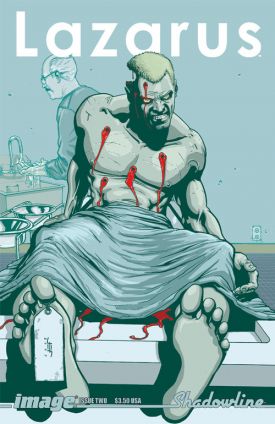
Although there had been precedents before, when Image Comics’ founders, Todd McFarlane, Jim Valentino, Jim Lee, Erik Larsen, Rob Liefeld, and Mark Silvestri founded their self publishing imprint, they created a new model that at the time was seen as a viable alternative for creators who wanted to publish their own books and retain ownership over their creations.
|
What is often forgotten is that Image Comics was first officially published by Malibu Comics, which was the business partner of Image Comics when the founders started. Malibu Comics provided easy access to the distribution network and the backend of a publishing unit, allowing Image Comics’ products from reaching customers. The veneer and hyped marketing talk at the time argued that comic books and characters that were not creator-owned were detrimental to the long term interests of the comic book industry because it somehow slighted the creators. It was thus assumed that if the creators were slighted in the transaction, that customers were also slighted and that when they purchased non creator-owned comic books, that they received lesser products. This assumption was false then and is false today.
I will not argue the merits of creator-owned contents over that which is not. It’s a matter of taste that usually leaves out one aspect of the equation which is the most important of all, the customer. That
Spider-man is owned by
Marvel Comics has nothing to do with how good the stories are. Proponents of creator-owned comic books argue that characters, when in the hands of their initial owners, are allowed to change and evolve and are free from purely business concerns. I refute this attitude by saying that there is nothing wrong with good business principles.
If
Spider-man was owned by Steve Dikto and
Stan Lee today, his continuity would still be subject to business interests. The bad decisions about the character that many complain about would still have occurred, differently and at another time, perhaps, but overall nothing would have changed.
Since
Spawn has been published, has the character in the comic book reached any groundbreaking point or done anything that a third party licensor would object to, if there were such a thing as a third party licensor for Todd McFarlane’s Spawn? In fact, concerning creator-owned properties acquired by McFarlane, such as
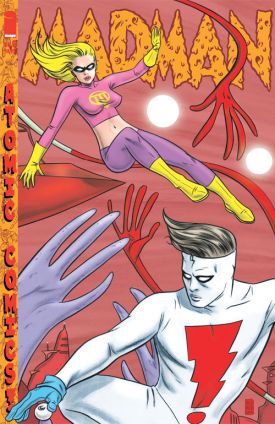
Miracle Man, many would argue that his attitude toward creator Neil Gaiman has been similar to any other comic book publisher, if not worse.
In the years that I have watched this industry, few individuals have shown what I consider a business brain to making comic books. One of the few, Jim Shooter, notwithstanding what many have to say, had a good understanding of sound business practice. He first introduced these practices when he headed Marvel Comics as its editor in chief. At the time,
Iron Man in the comic books had little noses drawn on them, to make them fit with the toys released elsewhere. This example is always the extreme example used to show that business influence and focus should have no say in the comic book industry. At the core, this is what drove guys like the Image Comics founders to create their company and this is what continues to influence generations of creators to want to control every aspect of their creations, in order to save them from having to conform to a defective toy mould created somewhere in China.
|
The creator-owned ideal has become another taboo and dogmatic concept that dominates every action in the comic book industry, just like the domination of writers over a visual medium and the personality cult around creators that take precedence over the popularity of the features and contents in comic books. About the precedence of writers over a visual medium, and the personality cult around comic book creators, I will have to address these at other times, but both are direct consequences of the creator-owned dogma.
No Business School Recruits
When I go to a comic book convention and look at the enthusiasts in attendance, I see lots of young hopefuls wishing to become the next great comic book penciler or the next great writer. A few times, some will discuss the jobs of editors and colorists. But very few ever claim to want to become comic book industry marketing professionals, business executives or any type of support function that requires the skill of so many talented individual to make sure a given comic book reaches a customer’s hand on time. All of the focus is on the creative ends of things.
The recruitment of comic book business experts is done mostly through osmosis from the creative end of things to the business side. In other words, the nuts are controlling the ship. The right talent needed for sound business management is also recruited through the comic book press, through relatives, girl friends and lastly through traditional job postings. Very few individuals complete management degrees hoping to join the comic book industry. Very few promoters of comic book projects start exclusively as business folks. Hence the talent pool of people needed to steer the industry in the right direction, because for them comic book is more than something they help their boyfriends with, is lacking. Without strong business talents entering the comic book industry, it is no doubt that excellence and legitimate business influence is suspect.
Back To Good Management
Talking about money and sound management in the comic book industry is taboo. It is considered boring and a barrier to creation. Many creators think that they can run the business end of the comic book they publish as well as they can create the contents of their series. This of course, runs afoul every business 101 course taught in North America and assumes that highly creative folks are also great business persons.
Creative folks in general are not the best decision-makers. They often reject proposals or refuse to make changes to their work, by invoking creative licenses. If they were sensitized to good business principles, their books would reach the stores on time and some of the drastic changes in the storytelling would not occur, because they would understand how that could alienate potential readers.
The most important part of the comic book industry is the customer which reads and buys the comic books that creators create. All creators should pause a bit and remember who it is they serve when they make a comic book. Artists and writers do not run supreme in this industry.
There is an avenue for art comics with limited runs that challenge readers and explore themes. But the bulk of the comic book industry is not about exploring creative limits and deconstructing existential philosophies. The bulk of the comic book industry is concerned about whether
Buffy will defeat the latest threat to her hometown and whether
Green Lantern can finally overcome his weakness over the colour yellow. There is nothing existential about these that warrant the prima donna attitude of the majority of comic book creators. The vast majority of comic books exist to entertain readers, not explore the inner depth and thoughts of their creators.
And in the case of those comic books with “higher designs” they too require a solid publisher to make sure they reach as many customers as possible. Creating a “groundbreaking” comic book story does not shield creators from the first requirement in their contracts which is serving readers. I can already hear all the creators reading this cringe at the fact of serving the readers which they often deem as uncultivated and boorish. They believe that because they are creators, they know best.
A creator that knows best is a creator that does not shy away from the humility needed to accept that they are but a piece of an equation and that this equation is controlled and should always be in the best interests of the consumers who foot the bills for this entire industry. It is time for creators to acknowledge that they are not super stars but the people hired by the consumers to entertain them.
Most comic book creators think of themselves as haute couture designers who create contents that is to be purchased by a rich elite that will marvel at any crazy design. In reality, the bulk of comic book creators are hired to dream up the causal and office clothes that most people wear daily and within a reasonable budget.
Part of what makes a creator effective is a freedom of creation. However, as the bulk of the comic book industry is not geared toward the fine arts exploration, there is a need for someone in the middle that can bridge and focus the creativity of the creator into something the customer is willing to buy. That person is the publisher and it is time that the publisher takes his place back and stop being afraid of being accused of reaping off creators.
What a Publisher Should Be
It is the responsibility of the publisher to make sure that comic books are delivered on time and through as many distribution channels as possible. Their job is to sell copies and generate number and revenue. It is their responsibility to understand what their customers want and how to give them what they want. They have to be capable and willing to influence creators into creating properties that readers will read.
Having said this, it is clear that one of the most popular publishing models, the one that originates from Image Comics is not workable. The publisher here, Image Comics is not doing the job that is required of a publisher. It is not the independent influencer that steer creators into performing in the interests of the consumer. Instead, Image Comics, and all its clones, exist to entertain the creators that hook up with them. How can this be sustainable?
A good publisher should never moonlight as a creator. A good publisher should recruit personnel that want to work in the comic book industry in support roles that do not involve creative endeavours. A good publisher should be the one making business decisions on most matters that do not involve the contents within a comic book. A good publisher should be focused on sales and sales and sales. A good publisher should care at least as much about the consumer it serves as the creators it publishes.
More on that next week.
Last Updated: July 2, 2026 - 07:01
 ComicBookBin