Comics /
Spotlight /
Queer Comics
What Can a Straight Reader Learn from Gay Comics?
By
Hervé St-Louis
August 24, 2008 - 22:14
When I went to the last San Diego Comic-con, I saw people who I rarely see in the street of my local town. I saw people, social misfits that were severely overweight – obese, that were at the convention and were having fun. I remember this one girl. She was about 26, clearly obese, had difficulty walking up the stairs. Yet here she was. In any other venue, people would have looked at her with disgust, because of her weight. She is probably an outcast and the comic book world, and by extension the geeky extravaganza that is the San Diego Comic-con is the one place where she can feel at home.
Comic books have always been a refuge for social misfits, artists, and people outside of the norms. Why would it be any surprise to find that many comic book readers are homosexuals? When movie director, Bryan Singer launched the
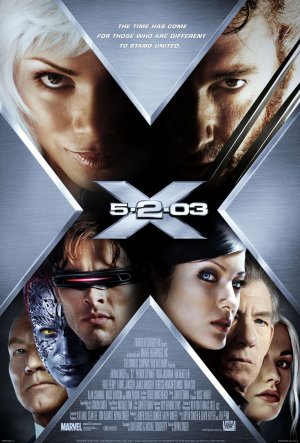
X-Men movie series, he used allegory that was all too clear to cultural viewers of what is happening in America and the rest of the world. He literally borrowed the exclusion of homosexuals from society as the model over which mutants – and the X-Men were to be outcasts.
Many reviewers and commentators have commented that when
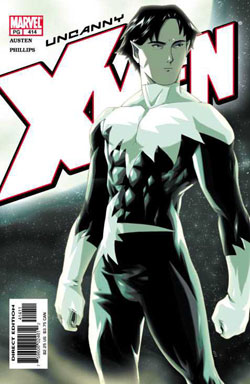
Iceman, Bobby Drake, came out to his parents as a mutant, in
X2 X-Men United, it was as if a gay man was coming out to his family. The scene was effective, and for many, it was the first time that they understood. I got the message. Although in the past, the plight of the X-Men and mutants had been based on the exclusion of abuse of Jews in Europe and the segregation of blacks in the United States, the exclusion of a hidden minority was something neither Jews nor blacks could express easily. The element of staying hidden and perhaps one day coming out to the world was something homosexuals could easily bring to the world of mutants. And therefore, the circle was complete. While Magneto, was shown to be a victim of Nazi concentration camps as a Jew; whereas the Beast or
Nightcrawler, were forever considered visual targets and instantaneous monsters and foreigners because of their looks; it was when Bobby Drake, as Iceman told his secret to his parents, that all of the facets of exclusions were forever contained in the concept of the mutant.
That day, as I watched that movie, I learned a lot. Instead of explaining the plight of the mutants to me, Singer explained the plight of homosexuals to me.
Homosexuals have begun asking for more representation in the comic books they read. I’m willing to bet that the percentage of homosexuals is greater in comic book readers than the percentage in the public. At first, like many, I found the demands annoying. Why were they always asking for more representation? Then, I evolved. I wasn’t against representation, but I neither did I want to know anything or see it in my comic books. It was called toleration.
But whether I was ready to tolerate or not, Judd Winick added a major gay storyline to the
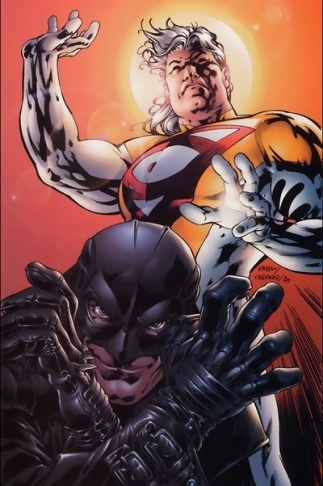
Green Lantern series of the early 2000s. DC Comics’ imprint, Wildstorm Comics, published a series with two openly gay men,
Apollo and
Midnighter, who were ciphers of Superman and Batman. For years people joked about how both Superman and Batman looked gay. Now, someone had made it a reality and shown the full extent of what that meant, if explored seriously. The strangest thing is that it did not bother me. I was all right!
It wasn’t the real Batman or Superman. But the story still made sense. There has been many interpretations of Batman and Superman in what DC Comics refers as Elseworld stories. The stories of Apollo and Midnighter, and their teammates in the Authority were just new ways of looking at familiar concepts.
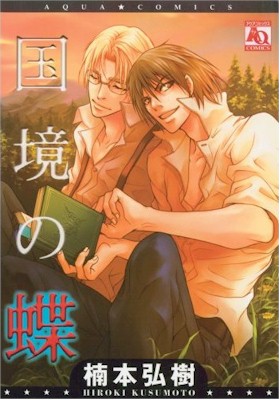
But beyond the super hero world, creators and readers have tried to forge a world for themselves where they could publish stories that were directly related to their experiences. Readers seek stories where they can see themselves and not have to apologize for their sexual orientations. I think the ultimate test, for the full acceptance of homosexuals is whether we can discuss issues that relate to them in the comic book world in a place where they no longer have to be shield from majority. I think the Comic Book Bin has begun to do that with our Yaoi section. However, that’s not exactly right.
All homosexuals do not universally enjoy Yaoi.
If straight readers have to learn from gay comics, perhaps they should be exposed to gay comics where they read about every other type of comic books. I think homosexual readers would benefit from a safe haven where issues that relate to comic books and homosexuality are discussed along with other issues about comic books, as opposed to a segregated Web site, just for gays. I can’t think of a better place to start this open discussion in respect than the Comic Book Bin. People, start writing intelligently and respectfully about your experience with comic books and homosexuality, whether you are gay or not and
we’ll post it here, at The Comic Book Bin.
Last Updated: November 29, 2025 - 16:51
 ComicBookBin