Comics /
Spotlight
Marvel History Part 7 - Millennium Revival
By
Frederic Haddox
August 29, 2008 - 08:53
It had become increasingly apparent that through much of the 1990s Marvel Comics has struggled to satisfy its new readers without turning away its old ones.
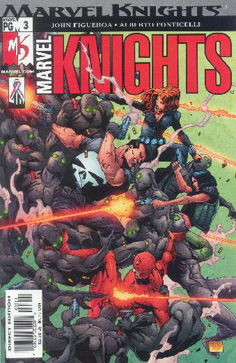
Marvel Knights was one of the few attempts that seemed to fulfill this goal. The series, under the creative lead of Joe Quesada, involved several characters who form a group and share a single storyline that spanned many issues and became an imprint for a line of titles. Marvel Comics outsourced the work through Event Comics, owned by Quesada and Jimmy Palmiotti. [16]
The keys to Marvel Knight’s success include storylines that don’t interfere with the “actual” Marvel Universe, more edgy content and less involvement of top Marvel Comics characters. After much popularity, the series became a normal line under Marvel Comics’ production.
The most important factor that would definitely salvage Marvel Comics, as well as give it hope for the future was the New Line Cinema release of
Blade.
Blade, originally appearing in the
Spider-man series, was a powerful half-vampire who dedicated his life to killing vampires. The enormous success of the film made Blade a franchise character. It also created a cinema fan base that eagerly awaited more films based on Marvel Comics’ characters.
The new millennium marked a new beginning for much of the industry. While comic sales declined towards the end of the 1990s, the sales of graphic novel were rising. Their inclusion in bookstores and libraries exposed readers, unfamiliar with comic books, to other genres outside of American mainstream comic books. More literary columns were devoting space for graphic novels. Thus sequential art received further attention by much of the traditional literary industry.
Soon major publishing houses owned subsidiary comic companies. Even though larger comic companies like DC and Marvel Comics had more experience, they still needed to remodel their marketing strategies. In 2000, Quesada became Marvels 13th editor-in-chief. [1] Riding on the strength of the
Marvel Knights series and the ambitious film release schedule, Marvel Comic’ future definitely looked positive.
The film release of
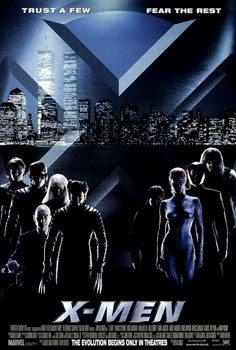
X-Men, proving more successful than
Blade, forced the film industry to seriously consider the “profit potential” of comic book-based properties. September 11th, 2001 set the overall tone for much of this decade. The destruction of something that was thought to be indestructible brought about feelings of doubt and uncertainty. Many people were forced to contemplate their own lives and the purpose behind them. History has already proved that this was a time for super heroes.
In memory of the September 11th tragedy, Marvel Comics released three titles. [17] One of these, Heroes, was a poster book.
The Amazing Spider-man #36 featured Spider-man and other character’s reactions to the event.
A Moment of Silence, inspired by true stories, included four wordless stories offering different points of view. In 2002 and 2003,
Spider-man and
Daredevil were released in the cinemas. [13]
Spider-man instantly became the largest seller since
Blade thus far. Marvel Comics set out to release three films a year. Numerous animated series were being released as well. In 2000,
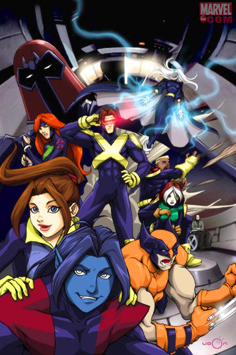
X-Men: Evolution, distributed through Warner Brothers, was perhaps the finest rendition of the X-Men made. [36] The popular series, which won two Emmy Awards, was able to avoid the complications created by the Saban series in the 1990s. Before long,
Spider-man had two new animated series. One was computer animated and followed traditional lines while the other was based on the 2099 character.
References
1. ^Wikepedia, the free encylopedia: “Marvel Comics”
13. ^ Internet movie database
16. ^Wikepedia, the free encylopedia: “Marvel Knights”
17. ^Wikepedia, the free encylopedia: “911 comics”
Last Updated: November 29, 2025 - 16:51
 ComicBookBin