Comics /
Spotlight
Hidden gems
By
Patrick Bérubé
November 9, 2009 - 04:15
With the quantity of comic books published every year, it is impossible for someone to read them all. Add to that the countless back issue existing and it sometime hard for someone to find the good read among the bad ones. Some of the Comic Book Bin's reviewer share with you their hidden gems, comic books that have been overlooked but who are worth hunting down.
|
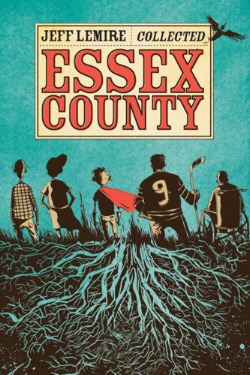
Zak Edwards: Jeff Lemire's complete Essex County trilogy is one of the most moving pieces I have seen in quite some time. Focusing on the quiet moments which can take people's lives in often heartbreaking ways, Essex County allows for the mundane to become quite extraordinary. Lemire is a rising star in graphic novels right now, with his Vertigo debut "The Nobody" dropping this summer and an ongoing series called Sweet Tooth just coming up to its third issue. Essex County is powerhouse literature and filled with heavy mundane material which really shines. Even though he can fall back onto some cliches concerning Canadian Literature and some scenes can border on the cheesy, his sincerity and ability to tell so much using very little proves this man has a big future ahead of him. Be prepared to get very sad and maybe even cry!
If you are in the mood for going back to the nineties, David Lapham's "Stray Bullets" is a powerhouse of for Mature Readers. While the big publishers were scrambling to stay out of bankruptcy by any means necessary, this indie comic destroyed many of the rules. The second issue will blow your mind and certainly not in a feel good sort of way. Unfortunately, Lapham's recent ongoing series, "Young Liars" was canceled earlier this year, but fans of that work or any of his others should take a look at this. Violent, amoral, and challenging, Stray Bullets is not for the weak at heart or the easily offended, but it will do you good to read it, especially if you find yourself needing a break from the capes. Also, this series is very much the hidden of the phrase hidden gem as the collections are all out of print.
Patrick Oliver: I'm not sure if these are hidden gems or not, but if you haven't had a chance to read them yet, I'm sure you'll find something here to entertain you.
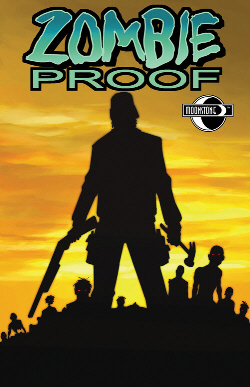
Let me first continue along the path of zombiedom I have recently been treading and tell you about a three issue mini series from J.C. Vaughn, Vincent Spencer and Moonstone Books, called 'Zombie Proof.' In it Bob Driwahl (nice pun!) is one of the central characters and, as as a young boy dreamt that there would be a major scourge of zombies one day. Understandably, the people in his small Texan town think he's less than sane because of this. But he builds up a very good business as a builder and handy man all the same. One of his specialties being zombie proofing! Soon, isolated pockets of zombies occur and pretty soon it is a nation wide problem. Bob Driwahl finds that his abilities as a builder, leader and fighter are soon in high demand. I love this series. It's funny, has great characters, cool set pieces, shakes a fist at small town politics. It also handles relationships and the consequences of the outbreak and of killing people who you may have been talking with that very morning, well. It is solidly plotted and zips along at a great pace. If there is a producer casting about for something to adapt in the wake of Zombieland they couldn't do much better than taking a look at this.
For those of a religious bent, or interested in existential dilemmas or just darn good thrillers. I give you 'Midnight Nation' a 12 issue series written by J. Michael Straczynski. 'Midnight Nation' deals with the journey to possible redemption of a cop (David Grey) who has been severely injured in an attack and wakes to find himself in limbo. He soon finds that he has a guide who will accompany on his journey to get his soul back from a being known only as, 'The Other Guy'. He and his guide, Laurel, set off on foot to New York, and along the way she and David encounter a series of tests and individuals (one of whom may be Lazurus) as he struggles to come to terms with his situation and try to retain what makes him human. As David battles to keep it together he becomes ever more aware that meeting with 'The Other Guy' could well be the making or breaking of him..if he makes it that far. I remember having this series on order, and really wanting to know what was coming up next such was the gripping nature of it. Well written and drawn with plenty of action, this is an excellent read.
|
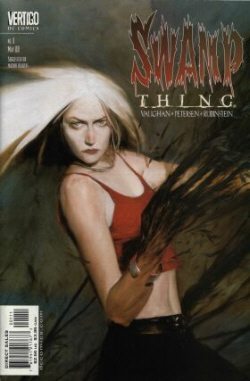
Patrick Bérubé: When we think about Swamp Thing, we usually think about Alan Moore and Stephen Bissette's classic take on the series that helped defined the character and that is considered a turning point for the whole comic book industry. However, others have tackled this series and even if theirs runs were not as memorable they are still quite enjoyable. A good example of this is issues #1 to #20 of the third volume published in 2000-2001 by none other than Brian K. Vaughan. I don't know how it was received at the time seeing that it lasted only a year and a half but if you appreciated Y: the last man, Ex Machina or Runaways you should definitely search for these back issues. It contains everything we have come to love from M. Vaughan writing: teenage angst, strong characterization, some cliffhangers and a cool mix of stand alone issue and longer story arc. The art is also great and his shared between Roger Petersen and Giuseppe Camuncoli.
My second hidden gem is Berlin by Jason Lutes published by Drawn and Quartely. I ordered it recently based solely on the good reviews I had read online. Lutes creates a tapestry of characters living in Berlin in the late 1920's and with each characters come a particular facet of the German society. Slowly, and unlikely as it seems, each characters' life starts to get tangled with the others as they are swept by strong social, cultural and economic changes. So far, Berlin is one of the best work of fiction I have read concerning this period of time. Not only is it historically accurate but it is also very well told with an emphasis on the characters' personal visions of the events. Jason Lutes' pencil may seems stiff sometimes but his storyteller talent more than compensate for that. So far two volumes are out with a third in the work.
|
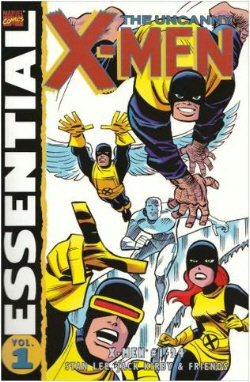
Andy Frisk: Ever since reading Secret Identity Crisis: Comic Books and The Unmasking of Cold War America by Matthew J. Costello, I've been inspired to look back at how Marvel's superhero comic books of the 1960's in varying ways reflected the status quo of the political establishment and rejected it at other times. It's also interesting to the sequential art or pop art scholar to get a view of how popular culture and political culture influence and reflect one another. Early issues of The Fantastic Four which show Reed Richards and his crew rushing to "beat the commies" into space and early Iron Man adventures, such as that chronicled in Tales of Suspense #42 where he fights (as Costello states) a "subhuman communist" named The Red Barbarian (and which has some hilarious appearances by Nikita Kruschev as well) are prime examples of Marvel Comics' adherence to the political status quo and reflect a direct influence of the political thought of the late 1950's America. Early issues of The Uncanny X-Men though reflect an opposite view and rejection of the status quo as they chronicle the adventures of a group of outsiders or "others" who are desperately trying to integrate themselves and have their voices heard by society at large in an effort to promote equality for their kind, namely mutants. "Mutant" has long been Marvel Comics' code for the "other" which is often defined as an oppressed minority. These early stories are indispensable to the pop art/sequential art scholar when examining the interesting reflection/rejection of the American political status quo of the 1960's and the burgeoning civil rights movement. These early stories are also extremely rare and individual issues of them are extremely valuable, and expensive.
Enter the Marvel Essentials line of trade paperbacks. These volumes reprint the first appearances and early issues of some of Marvel Comics' most influential and groundbreaking series. Volumes include Iron Man, The Fantastic Four, The Uncanny X-Men, Daredevil, and many, many others. Everything the Marvel Comics or pop culture scholar needs to become well versed on the early ideas being supported and challenged as time went on are at your fingertips with Marvel Essentials. They typically run around $17.00 a volume, but many local comic shops have them on perpetual discount. One in my specific area sells them for $5.00 a book! These volumes do have their drawbacks though. They are NOT in color, and are printed on low quality paper. Some of the early editions of The Essentials volumes had spine trouble where it would come unglued very easily. As the line progressed the quality got better, but you still cannot beat a 500 page volume of eye opening, classic, and great stories from the most influential comic book publisher of all time. Marvel Comics does produce a Marvel Masterworks line that reproduces these same issues in color, but with a hard back edition price of nearly $50.00 and a new soft cover edition that runs around $20.00 to $25.00, The Essentials line is still the most economical, despite it's drawbacks.
Last Updated: November 29, 2025 - 16:51
 ComicBookBin