|
|

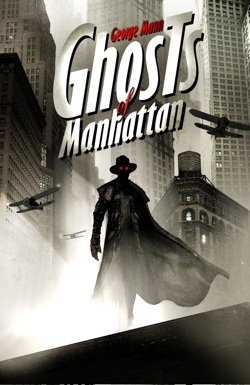 |
Meet Gabrial Cross, a scarred young man who served in the Great War, but in the years since – the book is set in 1926 – he has returned to a playboy’s life in New York City, fully aware that his wartime experiences have made him jaded where the wealthy upper class is concerned. The New York he has returned to is littered with jazz, bootleg hooch and a growing underworld that is only now becoming organized under a criminal mastermind known as the Roman.
The cars of this world run on steam, powered by coal rather than gasoline. A holographic telephone is common enough, and there are a few more gadgets to appeal to the retro-technophile for which steampunk is known, as well as twisted history. Britain and America are in the midst of a cold war.
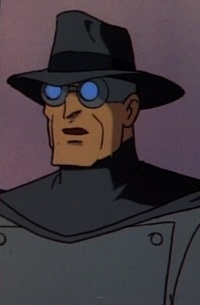 The Gray Ghost, from Batman: The Animated Series |
Supporting characters include a New York City police inspector by the name of Donovan, taken from the same mold as The Shadow’s Detective Joe Cardona; and Celeste, a jazz singer who is our hero’s Achilles heel.
The forces of darkness are most ably represented by Gideon Reece, a sadistic killer and chief underling of the Roman. As villains go, Reece is the Darth Maul of the book; which is to say he is far more interesting than his master, who makes little more than a cameo appearance toward the end of the story.
 Author George Mann |
In any event, I’m happy to overlook such trifles in my appreciation for a book that deftly blends the steampunk world with that of classic American pulps, though in my opinion, it leans more toward the latter.
Praise and adulation? Scorn and ridicule? E-mail me at philip@comicbookbin.com.
© Copyright 2002-2026 by Toon Doctor Inc. - All rights Reserved. All other texts, images, characters and trademarks are copyright their respective owners. Use of material in this document (including reproduction, modification, distribution, electronic transmission or republication) without prior written permission is strictly prohibited.