|
|


 |
Motorola Mobility while it was part of the combined Motorola company was suffering in the mobile market thanks to a combination of bad decisions, lack of innovation and competition. Motorola had the most successful phone on the market, thanks to the Razr. For years Motorola released new Razr models including after the launch of Apple’s iPhone. The iPhone, when it arrived in 2007, blew away much of the competition, be it BlackBerry, Microsof through HtC, Palm, Nokia and of course Motorola. It wasn’t until Motorola paired up in later 2009 with Verizon in the United States to release the Droid, the iconic Android device that could take on the iPhone, running the mobile operating system from Google, that the smartphone maker was back in the game. The Droid did what it was supposed to do and took on Apple’s head on and made Android almost a household name. Motorola Mobility was saved. Well, kinda. It was Verizon that branded Motorola’s smartphone the Droid. Outside of the United States, where Motorola distributes its phones, it’s known as the Milestone.
By launching an extensive campaign, Verizon established Droid as a housebrand. It didn’t benefit Motorola. Phones sold on other American carriers such as At & T had different names. Motorola went exclusive with Android as its operating system, even going as far as rebuking advances from Microsoft to develop Windows Phone 7 phones for its new mobile platform. Motorola, the American company that created the mobile phone is no longer different than original equipment manufacturers that make generic devices running other people’s operating systems. Motorola claimed mid 2010 that it would work on its own operating system, but nothing has been seen thus far. Motorola, one of the company with the most patents on mobile technology is no different than Taiwan-based HTC, the maker of the exquisite Nexus One. Even the Droid 2 phone released in the summer of 2010 had little magic and compared to the original Droid.
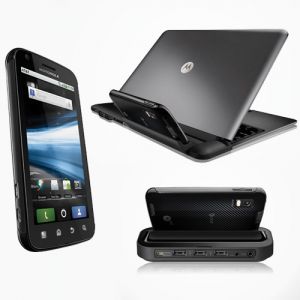
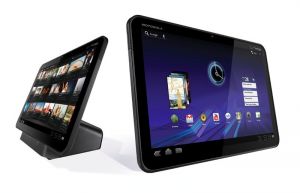
So at the 2011 Consumer Electronics Show, when Motorola introduced the Xoom tablet computer and the Atrix smartphone, it stole the show and impressed pundits, however, not for long. It’s been barely a month since Motorola showed the first Android tablet running the Honeycomb version built just for tablets. Unlike the Apple’s iPad, Honeycomb was designed specifically for enhance the use of a tablet while running a mobile operating system initially developed for a smartphone. Next, the Atrix, a smarthpone that combines with specially designed dock stations capable of turning basic notebooks into full laptop computers with enhanced features, stole the show at the 2011 CES. It can also combine with a car dock transforming the Atrix into a GPS device or when combine with the desktop dock, a multimedia relaying station. Both devices heralded a new future for Android, mobile computing and Motorola. But in typical fashion, it seems that Motorola Mobility is hell bent on destroying all the capital it gained when it first showed the products.
The main problem with both the Atrix and the Xoom are their price. The Xoom will retail for $800, that’s $300 more than a basic iPad. Motorola is offering through AT&T a confusing array of prices for the Atrix. The phone on its own is $200, a comparable price to other smartphones. But if you want to get the laptop dock, you’ll have to pay an extra $500, unless you order both before the launch date and buy them at the same time. If you buy both at launch day, it will cost you $500. The multimedia dock is a whopping $189.99. That’s right, almost the price of a second phone just to connect the device to a large monitor
The first Xoom to be release will come with 3G enabled, forcing users to shell out money with Verizon for a secondary Web connectivity data plan. Even if the user wants to rely only on the WI-FI connectivity, they will be forced into a one month 3G agreement with Verizon. This tactics means many people will forget to cancel their account at the end of the month and who knows, maybe they’ll magically discover that regular WI-FI connectivity is not as fast as 3G. Maybe the WI-FI on the Xoom is preventively crippled to make Verizon’s 3G plan more attractive. Selling the device by forcing customers into entering into a third party agreement at the same time is bad. If users want a WI-FI-only version, why not just sell it to them?
 |
Both the Xoom and the Atrix are starting to look less interesting than when they were shown. While it’s true that the Xoom’s hardware is more than on par with other competitors, its current top boss status will be broken relatively quickly. Other Android makes will introduce better tablets for much less. Wait until HTC, Samsung or LG start rolling with their new hardware later this year. Suddenly the Xoom’s edge will look ridiculous. And there are the other vendors too that don’t make Android devices such as Apple, Rim and HP. No one knows what Apple will release to take on the competition, but one thing is clear, it will be more affordable than the Xoom. Blackberry has shown its Playbook tablet already with features comparable to the Xoom, but with better connectivity to existing smartphones from the same ecosystem (BlackBerry phones). The Playbook plays well with existing Blackberry phones. If playing well with an ecosystem is the name of the game, then of course, HP’s Touchpad, introduced a few weeks ago wins over the Xoom. As well as a better tablet interface, it also kicks the Atrix concept of an ecosystem around while having decent specs next to a Xoom.
The Atrix and its new ecosystem is not backward compatible at all. It’s all new devices. The popular Droid and Droid II have no way of playing within that ecosystem. Of course, both are sold by Verizon instead of At & T. This is a major weakness for Motorola. While BlackBerry’s Playbook and HP’s webOS ecosystem can work across cellular carriers, Motorola thus far cannot bridge all the efforts gained with Verizon with its new Atrix ecosystem on AT&T. Motorola’s new ecosystem is based on Android, but unlike Sony-Ericson’s gaming platform on Android, there is little in terms of apps and software to tie this new ecosystem. I fail to see the benefit the Motorola ecosystem will have against other Android makers, let alone stronger competitors such as HP, Apple, or Rim.
Motorola Mobility is good at churning out new phones. It released a lot of new phones in 2010 at a rate that kept the pace with strong competitors like Samsung and HTC. However, the attempt to build a successful ecosystem seems rushed and not user-friendly. When I compare the ease of use of the HP webOS ecosystem when as simple tap exchanges data between devices next to the dock solution offered by Motorola, HP’s offer, is definitely sexier and more user friendly. My other worry is how much will Motorola support the new Xoom tablet and the Atrix ecosystem? Can we expect to have new Android updates often or will users with a one year device will be left in the dirt as current droid owners? Will Motorola actively court developers to make apps that enhance the Atrix ecosystem? Will it even be worth it for a developer to make apps just for the Atrix ecosystem? Are the Xoom and the Atrix the new direction for Motorola or is more lack of innovation and smugness when faced by the competition?
© Copyright 2002-2026 by Toon Doctor Inc. - All rights Reserved. All other texts, images, characters and trademarks are copyright their respective owners. Use of material in this document (including reproduction, modification, distribution, electronic transmission or republication) without prior written permission is strictly prohibited.