|
|

 |
The great viral marketing example of the season, Cloverfield shows us a monster movie through the eyes and camera of regular New Yorkers. Gone are the smart scientists, explaining what the threat is and how to defeat it. All viewers are left with is what they see on the camera. While noted for its viral promotional campaign, I find the most interesting thing about Cloverfield is about the movie itself. Unlike other movies of the genre, surviving and ultimately defeating the bad guy is of no consequences. The real challenge for the cast is to survive a few more hours.
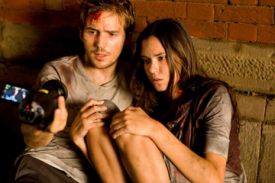 |
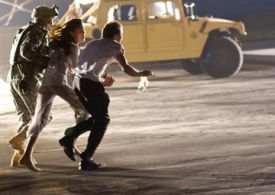
Everything about Cloverfield is written like a formula. Audiences are made to care about the characters first and abruptly introduced to the drama. Just like horror movies, members from the small circle of friends are eliminated one after the other until only the core of the survivors – read non expendables – are left. The difference with Cloverfield and other movies that follow formulas is that in this one most everything is random. Viewers also get a skewered look at the real threat. There’s the obligatory military briefing scene, and it seems that there’s a lot of valuable discussions about the threat going on in the back, but we only catch glimpse.
 |
I like the weaning of information that Cloverfield supplies to audiences. It doesn’t have to make sense or be explained. The ride is more fun. This is the very thing that audiences, who like the comfort of stories with clear ending and where everything is resolve, will hate Cloverfield. There is no point to all we’re seeing. There is no greater design or plot. There is no God or Spider-man to whisk you away from harm at the last minute. It’s all dry and pretty much how it would really be for people if such a similar threat would occur.
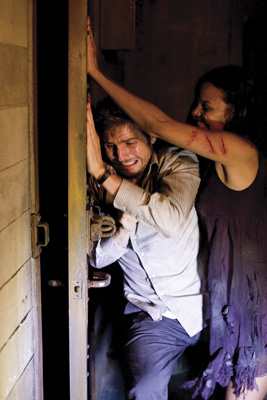 |
The cinematography is the most difficult aspect of the film. Hud is the one carrying the camera for most of the film. We see partly what he sees. He seems to see quite a lot more, but the camera can only capture part of it. This is where the cinematography becomes a real technical feat. For example, coordinating all the crowds running in all direction and the threats falling all over the place on the character required a superbly well done storyboard. While most will find the tripod-less camera shooting dizzying, it does translate the initial intent of the film, which is reality movie making.
© Copyright 2002-2026 by Toon Doctor Inc. - All rights Reserved. All other texts, images, characters and trademarks are copyright their respective owners. Use of material in this document (including reproduction, modification, distribution, electronic transmission or republication) without prior written permission is strictly prohibited.