Spotlight
Hardcover Conundrum
By Dan Horn
April 20, 2012 - 14:46
In the current global climes of corporate despotism, finding a company
whose consumer is as important as its bottom line has become
increasingly rare. However, this is not merely "good business practice"
as many corporatists would have us believe. The recent insolvency of GM
gives an interesting insight into that claim. When General Motors became
more concerned with balancing accounts than with making cars worth
buying, they lost nearly everything and were salvaged only by a federal
loan. Since that time, GM's new mission statement revolves around
quality and sustainability. They learned their lesson, an instruction in
the vulnerability of greed. The quick buck vanished as quickly as it
was obtained, and when they alienated customers by presenting overvalued and
mediocre products, they could not perpetuate business.
I'm not saying that automobiles and comic books are directly comparable,
but commerce is commerce nonetheless, and customer dissatisfaction is
translatable across the board. Quite a while ago, I wrote of my
indignation over Marvel's hardcover edition of Secret Avengers: Mission
to Mars. The collection in question aggregated five comic books, valued
at $3.99 individually, and was priced at 24.99 with not even a foreword
to speak of in terms of supplementary material. It was five comics
shoved between cardboard and re-solicited for an additional five
dollars.
Five dollars seems unreasonable for a simple repackaging, but it wasn't
an isolated event. Rather, it became the standard for Marvel Comics
hardcover collections: high price points; zero original or supplementary
material. At my local comic shop recently, I compared two new
hardcovers, Flex Menatallo, published by DC, and Secret Avengers: Run
the Mission, Don't Get Caught, Save the World, published by Marvel. As
an acolyte of Warren Ellis, I was excited to see his Secret Avengers run
collected, though it seemed incongruously soon for it to be released.
Upon opening the $24.99 book, I discovered the source of the expedience
immediately: nothing but six repackaged comic books.
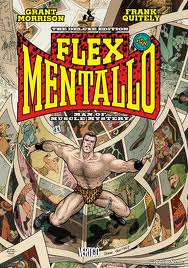
Conversely, upon inspecting Grant Morrison and Frank Quitely's Flex
Mentallo, I found a lush, immersive, and, most importantly, new reading
experience that was not just the sum of its original parts. The list
price for this Deluxe Edition? $22.99.
What's three dollars, right? It could be argued that Flex Mentallo was
only a four-issue mini-series, whereas readers get six issues with
Ellis' Secret Avengers book. But, hardcovers have long been considered
by the comic book community to be a collectible format in which the
enclosed material is celebrated in some way that differs from its
original printing. Flex Mentallo achieves this; Marvel's books do not,
nor do they attempt to.
But, if you're still able to rationalize Marvel hardcover price points,
I'm about to make that justification much more difficult. Consider the
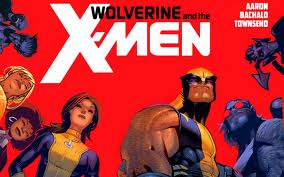
new Wolverine and the X-Men, Volume 1 trade hardcover from Marvel
Comics. This four-comic collection comes in at the hefty price of
$19.99, again lacking any supplementary material. This has caused some
understandable outrage, since the original Amazon.com ads claimed the
book would be collecting seven issues of the series instead of only
four.
Hardcover books aren't the only area where Marvel is losing ground,
however. A majority of Marvel's series have seen price bumps over the
last few years, from $2.99 to $3.99 an issue, while page counts per
issue concurrently dropped from 22 to 20. Trade paperbacks are also an
area of concern. Image Comics is a company that identifiably wishes to
facilitate a healthy relationship with its customers by presenting
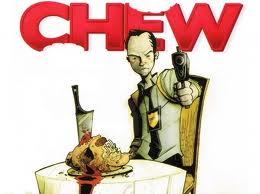
quality content at affordable prices. Is it any wonder that collections
for Chew are experiencing widespread exposure, landing in the NY Times
Bestsellers list consistently, when they are listed at prices like $9.99
and 12.99? DC/Vertigo books are similarly affordable, though their
prices have been rising to take advantage of the Marvel-induced
inflation.
So, what can a consumer do to stop Marvel's exploitative practices? It's simple:
Stop buying their books.
Error: SERVERBUSY: Timed out waiting for a filelock