ComicBookBin
- Comics
- Comics Reviews
- Manga
- Comics Reviews
- European Comics
- News
- Comics News
- Press Releases
- Columns
- Spotlight
- Digital Comics
- Webcomics
- Cult Favorite
- Back Issues
- Webcomics
- Movies
- Toys
- Store
- More
- About
By Leroy Douresseaux
November 20, 2006 - 11:07
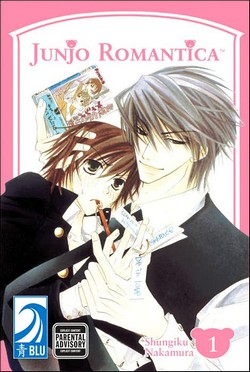 |
Junjo Romantica's main story focuses on Misaki Takahashi, a mediocre student determined to get into M University, but he'll need a miracle to get his grades up. That miracle comes in the form of a wealthy dilettante named Akihiko Usami. Usami is the best friend of Misaki's older brother, Takahiro. Usami secretly loves Takahiro, but can't bring himself to defile the sacred image of Takahiro by making a romantic move on him. Instead, Usami channels that love into helping Misaki improve his grades.
Soon, Usami is making passes at his young pupil, and though he rebuffs Usami, Misaki recognizes that he is developing strong feelings for the older man. However, Usami is an acclaimed literary figure, but he secretly writes boys' love novels. Misaki discovers that Usami is using their relationship as a point of reference for his steamy novels, and he's not happy.
Meanwhile, Kamijo Hiroki, a former paramour of Usami's and a graduate student, finds himself tutoring a handsome undergraduate named Kusama Nowaki. Hiroki initially wasn't interested in tutoring anyone, but Nowaki made a pest of himself until Hiroki agreed to help him with his studies. The two become more than friends. However, they are also of vastly different personalities and their relationship suffers major angst, including the reappearance of Usami.
Junjo Romantica, despite featuring two stories of intense love wracked by frequent fights, seems like one long repetitive fight between teen lovers. In fact there is more squabbling than loving. As a storyteller, Shungiku Nakamura certainly understands how to use the Manga form to tell stories, but, in terms of drawing, he isn't a very good draftsman. He seems obsessed with drawing folds in clothing or showing bends and folds in every day objects.
What he is good at is drawing single panel portraits of his characters and using deformed and abstraction to suggest emotion. His intimate single panel portraits of his characters and the way he portrays their emotions so explosively give life to this sometimes affected drama. The end of this volume does suggest better soap opera theatrics to come, which makes checking out a second volume worthwhile.
Visit BLU at BLUMANGA.com.
Rating: 6 /10