Comics /
Cult Favorite
Strength in Numbers
By
Philip Schweier
November 3, 2007 - 08:52
With the return of the third Flash, Wally West, to the DC Universe, the publisher has resumed publication of his long-running (pun intended) title, The Flash. It took over for the 13-issue The Flash – The Fastest Man Alive, which starred the fourth Flash, Bart Allen.
Wally had become one with the Speed Force at the conclusion of the more recent Crisis, though without a corpus delecti, it seemed only a matter of time before he would return. Who would've thought it would be so soon? His title, The Flash, picked up where it left off with number 231.
Use to be in the old days, a title might go on indefinite hiatus, only to pick up right where it was canceled. DC's original
Teen Titans series began in 1966, canceled at #43 in 1973, only to resume three years later for ten more issues.
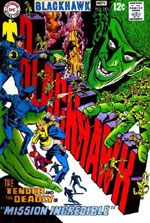
Blackhawk did it twice, after being canceled with #243 in 1968 and again in 1975 at #250, before beginning its final 23-issue run in 1980.
Longtime DC editor Julius Schwartz explained this practice at a 2003 convention appearance. "In those days, if you went to a newsstand to buy a comic, there'd be like 150 comics on the stand. And there's this young kid with a dime in his hand, looking for what to buy, and he sees two magazines. One is called issue #1, one is called issue #106. Which one is he gonna buy? He'll buy #106; that book is good, it's been going strong."
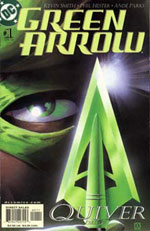
It's uncommon these days for a comic book to resume it's run, maintaining the same numbering system. When Kevin Smith resurrected Oliver Queen as Green Arrow in 2001, it began with #1, rather than with #138, where the previous series ended. Perhaps it made sense, in a way. Oliver Queen had died in #101, replaced by his son for the remainder of the series.
And Marvel, for whatever reason, chose to return
Wolverine to #1 in 2003, even though nothing had really changed in his title. No successor, no radical makeover, just a new numbering system, going from #189 in June, 2003 to #1 a month later.
This practice suggests to many fans that everything they've read up to this point is no longer valid. "Sorry, we made a mistake." Continuity is confusing enough without publishers arbitrarily suddenly deciding that a new letterer is reason to scrap years of backstory.
But I don't want to sound like an old fogey, lamenting the old days of comics as some hallowed golden age – or silver or bronze – but the fact is this industry we all love so much MUST evolve. Things change, improvements are made in the quality, the production, the variety of books. It's all for the better, otherwise it's going to become stagnant and die.
But in the case of a title in which nothing changes – same character, same motivations, same conflicts – why not keep the same numbering system? Should it matter if there's a break in the publishing of that title? Is a new writer or artist reason to reset everything back to square one?
Praise and adulation? Scorn and ridicule? E-mail me at philip@comicbookbin.com. Corrections to this article are gladly accepted.
Last Updated: November 29, 2025 - 16:51
 ComicBookBin