Comics /
Comics News
Watchmen & Comics Cannibalism
By
Zak Edwards
February 3, 2012 - 12:44
After reading some very obviously prepared and unoriginal statements over at Newsarama from the creators working on these Watchmen prequels, I have some more thoughts on the Before Watchmen event, as it has now been called, and the arguments for its existence. But before we get started, I highly recommend reading Andy Frisk's really intelligent article from a couple of days ago arguing in direct contention to what I say here. It's really well thought out and this article is dependent on his. But let’s just go through some of my thoughts in a logical order.
1. The “Alan Moore is a Hypocrite” Argument.
|
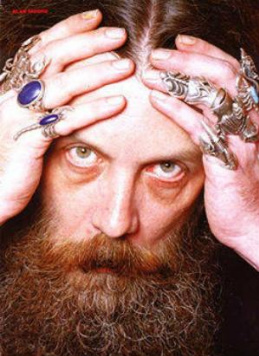
J. Michael Straczynski thinks Alan Moore “loses a little of the moral high ground to say, ‘I can write characters created by Jules Verne, H.G. Wells, Robert Louis Stevenson, Arthur Conan Doyle and Frank Baum, but it’s wrong for anyone else to write my characters.” This is, by far, the one argument people claiming to have thought this through are using, suggesting that the original Watchmen writer cannot stand there and condemn people messing with his work because he himself, to this day, uses public domain properties to sell books and even started his career by working on already established properties, like Swamp Thing. The issue here is not Alan Moore’s career, it’s Alan Moore himself, and it also ties into the whole “only Alan Moore should be allowed to write Watchmen related material.” Here is what is fundamentally wrong with this argument: Moore doesn’t matter. We are not looking at Moore, we are looking at Watchmen. How Moore got to where he is doesn’t matter. Yes, Watchmen started off as a reworking of DC’s acquired Charlton Characters, but they didn’t end up that way. The characters are more symbolically linked to established properties like Superman and Batman than Blue Beetle or the Question (Nite Owl II uses his basement as a hideout for a reason). This is important because, among other things, Watchmen is a genre piece and must use recognizable aspects of the superhero genre to make a point. Besides, we have all seen creators let things go on to long, creators we respect. Just think about the continual exploitation of various Joss Whedon franchises in comic form, or one of the innumerable television shows that completely passed their prime and were still worked on by their creators. And if that isn’t enough, than how about this: Watchmen is a twelve issue closed story with a beginning, middle, and end. The argument that other creators have written good and important stories based on characters like Superman, Batman, and others are forgetting that those were created with the intention of being continually ongoing. They were never expected to tell a single, cohesive, and closed story. Watchmen, on the other hand, is exactly that. So how Alan Moore got his ideas, his success, or even his recent projects, is about as consequential to the argument about ice cream and drownings. It doesn’t matter.
What this is an example of is justification for being involved in a project that links more to creative bankruptcy than originality. I think Moore’s daughter put it best, saying, “Why not do NEW ogn's from the Before Watchmen creators, or better yet fresh talent. Use the budget to find the *next* watchmen instead?” It doesn’t matter that a group of people, however talented, are constantly e-mailing to assure they are “excruciatingly faithful” (in the words of Straczynski) and working with the upmost respect for the original work, it’s a sign that these creators are in on the gravedigging. Or perhaps more frighteningly, these creators work in an industry that would rather waste their talent on this type of endeavor than actual original work, limiting opportunity in order to focus on recycling. This is probably why Brian K. Vaughan took his new project “Saga” away from DC to write it for Image Comics, the bigger companies are more interested in cannibalizing old concepts than investing in new ideas.
2. The Vitality Argument
|
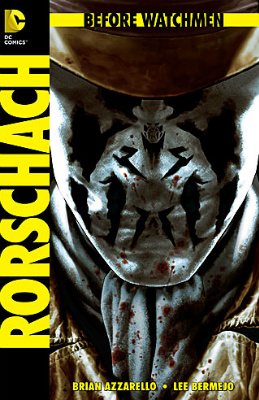
In Len Wein’s statement, he argues that “the need to inject new blood, new ideas, new approaches, is the only thing that keeps our readers coming back for more.” I would like to point out that Before Watchmen is none of the things Wein points to. Using well-established creators to work on an old, already finished book from twenty-five years ago is neither “new blood” nor “new ideas.” It is, in fact, old blood working on old ideas. Even worse, this “attempting to make something ‘old’ new again” discourse is primarily focused on a vitality sentiment, or lack thereof. Brian Azzarello, who’s writing both the Rorschach and Comedian stories, has gone on record as saying, “It's 25 years later. Let's make them vital again.” My question is this: How does a book that has never been out of print and is still one of the best-selling graphic novels of all time not vital? One may point to the very dated setting of 1985 and how the book is dealing with primarily Cold War politics, but the continual sale of this book would suggest to me it has never needed to be revitalized, as Azzarello suggests, because it has never become insignificant. Watchmen, besides being a mesmerizing look at the Cold War, is also, as my colleague Beth Davies-Stofka pointed out a couple of years ago, about “good and evil, the human condition, politics, ethics, truth, war and peace, and heroism.” Furthermore, Watchmen has only become more relevant as the War on Terror and 9/11 once again shifted the Western World into a Cold War-esque mindset. Just as books like “Pride and Prejudice” and “A Portrait of the Artist as a Young Man,” or hell, even Bob Dylan’s “Blowin’ in the Wind,” are continually relevant today, despite being dated in their settings and sensibilities, Watchmen has also proven to be continual relevant. It is not needing to be revitalized because it is still, and always has been, vital.
3. The “Adding Something New and Exciting” Argument
|
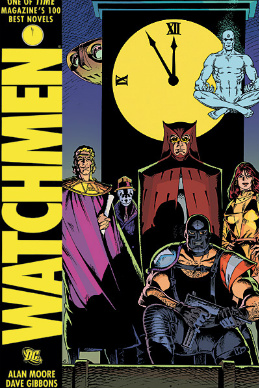
I’ve already covered one part of this argument above, and I do think there is something to be said about breathing new life into an old concept (comics are doing it constantly), but for this the question here is why. Why do you need Rorschach, Nite Owl, Dr. Manhattan, and Silk Spectre, characters already symbolically intertwined to other characters, to try something ‘new?’ Using these characters is simply detrimental. For example, Darwyn Cooke’s argument for his work on Silk Spectre is that “we never get to see her being self-sufficient and dealing with herself and dealing with her own problems. She’s there for a man.” While I think this is partially true, her intrinsic ties to the plot, as well as themes relating to this dependency on others (especially legacy and her mother), proves Laurie is an inherently flawed character because of the responsibility she has always had to others. There is a reason beyond attraction that Laurie ends up with a character carrying another person’s name and legacy. There isn’t, however, a point in Laurie’s life where she was apart from this. I know this because absolutely everything I need to know about Laurie is already in the twelve issues of Watchmen. Cooke’s attempt to fabricate some period that fits with what I believe to be a very weak feminist argument about Laurie’s depiction is failing from the outset. Similarly, Azzarello is already on record saying his Rorschach is going to be “the Rorschach that you know and want,” proving from the outset that this is pandering, not creativity.
The fact of the matter is that the stories that will be told, no matter how good they may be, will be derivative at best and simply using these characters as stand-ins for other characters at worst. The creators and publishers have the legal rights to do this, some would argue the moral and ethical rights as well, but in terms of Watchmen as a text itself, nothing can be added, only taken away. These stories’ success depends on weak reading of the original material where what isn’t immediately apparent is discarded and single readings of a very dense text is carelessly dependent on pandering. One of the greatest things about Watchmen is how Moore assumes an intelligent readership that can deduce what is presented and reread in order to gain a deeper, more mature, and rounded experience. The want for additional plot is, to be frank, is attempting to take an intelligent work and distill it for an unintelligent readership.
Last Updated: November 29, 2025 - 16:51
 ComicBookBin