Comics /
European Comics
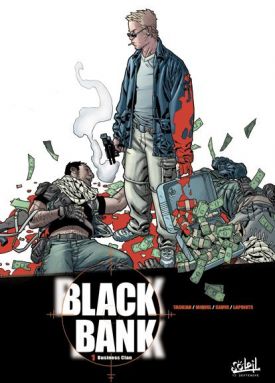
Black Bank: Business Clan
By
Hervé St-Louis
October 24, 2007 - 01:06
From Guantanamo to the Palestine West Bank,
Black Bank is an epic heist thriller with spins and twists at every corner. American Adrian Stolker negotiated a deal with Mordecai, an arms’ dealer to equip a Palestinian rebel group with American weapons and American money, against Israel. But the deal goes sour and the heist, appears to be but a game in a greater conspiracy, involving the FBI, the CIA and more players. Can Stolker figure out a way to extricate himself from this situation, or should he take more classes at
Ocean’s Eleven’s school of business? This is the first volume of a story that has yet to be translated from French to English.
This story was unexpected. From the first few pages until the end, you will never know exactly who is playing whom and if Stolker, master of tricks and heist is not the dumbest one of all. In that respect, this story is far more challenging and exciting than the typical
Ocean’s fare. Here readers will be guessing until the end. Although the real plot is exposed at the end, it seems that it will be but another set of tricks being played on characters and readers. It's a good story that seems to be a political one, but then jumps on so many genres, including good old conspiracies about the American military arms establishment.
Herein lies the first weakness of the story. By trying to be smart, it jumbles a lot of elements as if that alone could make it cool or interesting. At least, there are good subplots about the main characters and their families. The second weakness of the story is symptomatic of the French expressed by people in France. It’s filled with English anglicisms which might sound cool for some, but break the realism of the story. To keep in character, the protagonists should express themselves in consistent French and not borrow so much from English when it is not necessary. It sounds ridiculous to read a story about English speaking Americans who express themselves in French but keep using English words in their narratives.
It’s interesting to see how a North American comic book artist fits in a European comic book. The story plays to Sauvé’s strengths which are realistic sets with lots of details. These details crowd the page and make the main elements of his compositions buried under piles of visual information. It looks good, but it doesn’t read easily. The characters’ faces are not consistent. It's as if Sauvé was still trying to define the characters all the way to the end of the story.
Last Updated: November 29, 2025 - 16:51
 ComicBookBin