Movies /
Comics Movie Reviews
Avengers Spotlight: Iron Man
By
Troy-Jeffrey Allen
May 3, 2012 - 15:54
DC Comics sets the standard and Marvel breaks the rules. Simply put, it’s the defining characteristic of both companies, the reason that we secretly pit them against each other. Spider-Man is a popular character, but he’ll never be the milestone that Superman has proven to be. In the 1930s, DC came and set the superhero standard and then, in the 1960s, Marvel helped reinvent the wheel. Even further, the two companies’ opposing strategies are also the reason that Marvel disobeyed the Comics Code Authority, leading DC to follow suit. And, specifically for the sake of this series of articles, It is the reason that Superman: The Movie has been the template for so many superhero films. People love it and they assume that no other superhero film can function any other way. All the more reason that Marvel’s The Avengers film is going to shatter that standard once and for all.
In anticipation of The Avengers, I’m revisiting the Marvel films that lead up to the May 5th release. The Joss Whedon-helmed movie event has the potential to be the comic book industry’s most important bid to re-establish its status as modern mythology. I’ll be reviewing each film as I’m attending what my local Regal multiplex has dubbed “The Marvel Movie Marathon.” Ill be examining why certain films captivated the zeitgeist, why certain films failed to impress critics, what each film meant for Marvel Studios’ end game, why The Avengers film could be a bigger sales boost for comic books than the New 52, and how Marvel has augmented Hollywood’s game plan.
First up, Jon Favreau’s Iron Man…
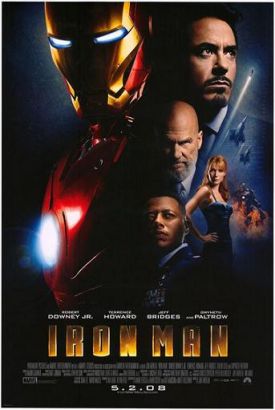
Depending on who you ask, it’s easy to conclude that Marvel’s Iron Man was successful thanks largely to the on-screen arrogance and genial energy of actor Robert Downey Jr. If Marvel had cast anyone else but the Oscar-nominated actor (George Clooney and Tom Cruise were both rumored to be up for the role) it could’ve caused this whole Avengers experiment to hit the ground before it took off.
Then again, you could also argue that it was the combined efforts of screenwriter Mark Fergus and Hawk Ostby that managed to make the entire film cohesive. Despite several drafts by several different writers, it was Fergus and Ostby who re-discovered the literal and figurative theme,of the Iron Man comics. Or, as one of the writers put it so simply on an episode of the Creative Screenwriting podcast, Iron Man is “about a man finding his heart.”
More over, you could also argue that despite Marvel’s best intentions, Iron Man could’ve have been a lopsided narrative mess without the steady directorial hand of Jon Favreau. Thanks to Favreau’s effective world-building (which seems to have informed the Avengers films that came after), the political undertones somehow manage to line up evenly with the mechanized deering-do.
Regardless of who propelled Iron Man into becoming Marvel Studios’most bankable hero, ultimately, it was up to the audience to decide if they were ready for a hero like Tony Stark…
It was 2008 when the first Iron Man film hinted at the “Marvel Cinematic Universe.” It’s important to note that fact because Iron Man was released smack dab in the middle of a historical election year for America. After eight years of war-profiteering and disillusionment with the very real Bush administration, reformed arms dealer Tony Stark was the model of American guilt, representing all of the qualities that the world needed from America’s 2008 presidential candidates.
A charismatic capitalist turned POW, Stark sees the error of his ways and decides to promote peace. That’s the liberal side. However, on the conservative side, he isn’t afraid to get on the frontlines and “repulsor ray” a few terrorists to get his point across.
With the economy currently crawling out of your personal hell, it’s easy to balk at the comparison. However, four years ago, the world eagerly counted down the months leading up to the conclusion of the uncompromising Bush administration. At the same time, enter the newly independent Marvel Studios. On the racks, Marvel was wearing it’s liberalism on its sleeve (Civil War comes to mind), but on the silver screen, that type of heart bleeding could spell doom for the up and coming film company.
The studio, the script, the director, and the lead actor all came together to give everyone the type of superhero that we wanted, needed, and loved. The film playedboth sides of the fence while hinting at collective our concerns about greed (almost as if Marvel Studios was airing its grievances against Sony and Fox) and the casualties of war. Yet, it still manages to end with everyone smiling and laughing about the experience.
Last Updated: November 29, 2025 - 16:51
 ComicBookBin